
From Uppsala to Nairobi – Travel blog Spring 2025

It all started with excitement in the air as our cheerful group took off from Arlanda, with a layover in Ethiopia. But the adventure kicked off sooner than expected. Just before boarding our flight to Nairobi, Alexandra — one of our travel trustees — realized her passport was missing. She and our Head of Travel, Ludwig, were forced to stay behind in Addis Ababa while the rest of us continued to Kenya. With the Swedish embassy closed for Easter and no way to check into the airport hotel without a passport or boarding pass, they were stuck — literally — at the airport, with nowhere to sleep for three days. Finally, Alexandra was cleared to return to Sweden with the embassy´s help. But just as she prepared to leave, word came through: her passport had been found. She rerouted and joined us in Nairobi — three days late, but with a story to tell. Meanwhile, the rest of us had already spent some time in Nairobi, starting off with a visit to the slum area of Kibera and the organization Wale Wale that operates there. It is the second-largest slum in the world, housing an estimated 1 million people. They gave us a walking tour of the area, which was an eye-opening experience for all of us. It was very emotional to meet the people of Kibera, see their homes, and hear their stories. The money we paid to be able to have this tour went directly to the Wale Wale team and their families that we visited. This hopefully contributes to the continuation of their important work with youth activities and other social projects in the area. On Tuesday, Alexandra finally joined us in Nairobi — and we kicked things off with a visit to the International Commission of Jurists. It was a fascinating meeting where we learned about how they work with human rights and law in Kenya. Afterwards, we enjoyed a flavorful Indian lunch at Mangrove Café — the samosas were a hit! The afternoon was spent lounging by the pool, soaking up the sun. In the evening, the whole UF Uppsala crew cooked a classic tomato pasta and played cards — a cozy night in! The next day started with a few early risers hitting the gym, followed by a visit to the Swedish Embassy. A diplomat gave us great insight into how Sweden supports both Kenya and Somalia through development work. After lunch, we headed to the Raoul Wallenberg Institute. In the evening, it was time for a true Nairobi classic: Carnivore. This legendary restaurant served every kind of meat you can imagine — from crocodile to ostrich to, yes, testicles. Skewers kept coming until we could eat no more. It was a wild and unforgettable feast! Thursday began with another gym session for the dedicated few. We then visited Kazuri Beads, where we watched artisans craft colorful jewelry by hand and enjoyed a lively Kenyan dance performance. Most of us left with bags full of beautiful souvenirs. The afternoon took us to the University of Nairobi for a campus tour and chats with local students, followed by bargaining fun at the Maasai Market — a crash course in bargaining! Everyone bought matching Kenya football jerseys before winding down at the pool. Dinner was Indian again, with a fun diplomacy-themed quiz to close out the day. On Friday, the 25th, we had a free day. Most of us stayed by the pool to tan and relax, while a few explored the city. Some squeezed in yoga or another gym session before the day ended. Saturday, the 26th, started early — 5:30 AM — for our big safari day at Nairobi National Park. It was magical. Within minutes, we saw a lion devouring a gazelle, then rhinos, ostriches, giraffes, zebras, and even a cheetah in the distance. Watching these animals in their natural habitat was surreal. After the park, we visited the David Sheldrick Elephant Orphanage and Giraffe Center — both heartwarming and unforgettable experiences. After six hours of adventure, we were exhausted. The rest of the day was spent resting by the pool before heading to a rooftop bar for food and drinks to celebrate our final evening. Some of us checked out a Nairobi club — though we may have arrived a bit too early for the real party vibe. On departure day, we squeezed out the last bits of sun by the pool after one last gym session. Our journey home included a stopover in Addis Ababa, where we shared a final group meal — classic Ethiopian injera. For some, it was a new taste; for others, a comforting reminder of the Ethiopian taste. A trip we’ll never forget
A Journey to the Heart of Georgia: From Uppsala to Tbilisi – Travel Blog Autumn 2024
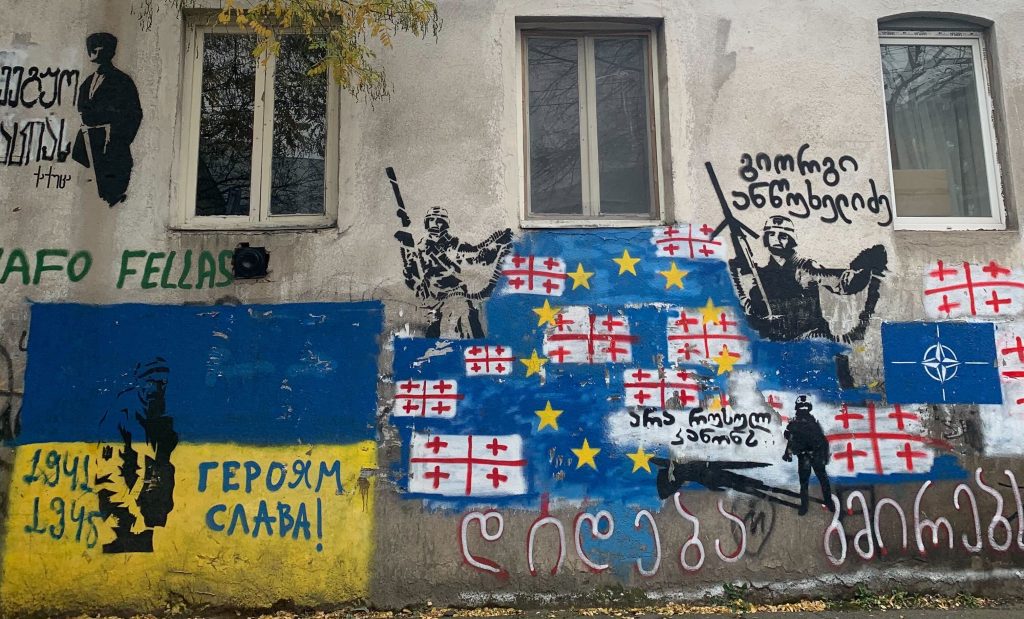
The sun had already set, and the crisp air of late November swept over us as we gathered at Uppsala Central Station. The excitement was palpable among the group, all of us eager for what lay ahead: a week-long adventure in Georgia, a country tucked between Europe and Asia, rich in history, culture, and stunning landscapes. The bus ride from Uppsala to Arlanda Airport was filled with conversations and though we all shared a keen interest in Georgia, our expectations varied widely. Some of us were already well-versed in the country’s rich history and complex political landscape, while others were mostly drawn to its famed landscapes and natural beauty. Regardless of our background, we were united by a shared sense of curiosity and adventure. After a quick check-in and a light dinner, we boarded the flight to Warsaw. As we prepared to take off from Warsaw to Georgia our phones buzzed in unison. News alerts flooded our screens: Georgia’s ruling party had just announced the suspension of the country’s EU application. The decision, which had come right after the recent elections, had sparked widespread protests. Our group exchanged uneasy glances. Our accommodation was a three-story villa in Varketili, a quieter neighborhood located at the end station on the city’s metro line. Given the fiery protests in the center of the town, staying a little further out made us feel safer. On our first day, we set out to explore Tbilisi. The city offered a fascinating mix of Soviet-era architecture alongside newly renovated, modern areas. Orthodox Christian influence was evident throughout the city, with beautiful churches on nearly every corner. Some of us took the opportunity to step inside these churches. That evening, we gathered for a traditional Georgian dinner, sharing a variety of dishes family-style. From khachapuri (cheese-filled bread) to khinkali (dumplings) and hearty stews, the food was an absolute highlight. Georgian cuisine did not disappoint, and we all agreed that it was one of the best parts of the trip. Throughout the week, we explored more of Tbilisi and beyond. We hiked to Chronicles of Georgia, a grand monument located on a hill overlooking the city. The views were breathtaking, and the sheer scale of the monument left a lasting impression. We also visited Turtle Lake, a peaceful spot surrounded by nature, where we relaxed and enjoyed the calm scenery. One of the most memorable days was spent hiking in the mountains. As we stood on the edge of a cliff, overlooking the vast valley below, it was impossible not to be struck by the raw beauty of the land. Some evenings, we stayed in the villa, cooking meals together and sharing stories over dinner. There were also plenty of evenings when we went out to enjoy dinner at local restaurants. Prices in Tbilisi were incredibly affordable, so we indulged in generous portions and diverse dishes. One of the most insightful experiences was our visit to the Swedish Embassy. There, we met with staff who explained the current situation in Georgia, providing context on the political unrest and the country’s evolving relationship with the EU. We also met with several local NGOs; firstly Volunteers Tbilisi, an organization that supports refugees, particularly from Ukraine. It was inspiring to hear about their work and the challenges they face, especially given the increased demand for assistance due to the ongoing conflict in Ukraine. Furtheron, we met the Equality Movement, an organization that promotes LGBT+ rights in Georgia. We were lucky to be invited to their annual conference, on the theme of HIV/AIDS prevention and the Family Values law (so-called anti-LGBT law) that came into effect that same day. The last NGO we met was the Europe-Georgia institute, a think-tank that promotes relations between Georgia and the European Union. They certainly had many interesting insights to share about the current political situation. We are deeply grateful for all of the meetings we were able to have and they provided us with great insight about the country. However, the political situation remained in the background, casting a shadow over our experiences. We saw glimpses of the protests on the streets and heard stories of people’s frustration with the government. It was clear that many Georgians felt a deep sense of betrayal, especially given their long-standing aspirations for closer ties with Europe. As we boarded our flight back home on December 5th, there was a bittersweet feeling among the travelers. Georgia had captured our hearts, and we had only begun to scratch the surface of its wonders. The country had welcomed us with open arms, and we left with a deeper understanding of its people, culture, and landscapes.
